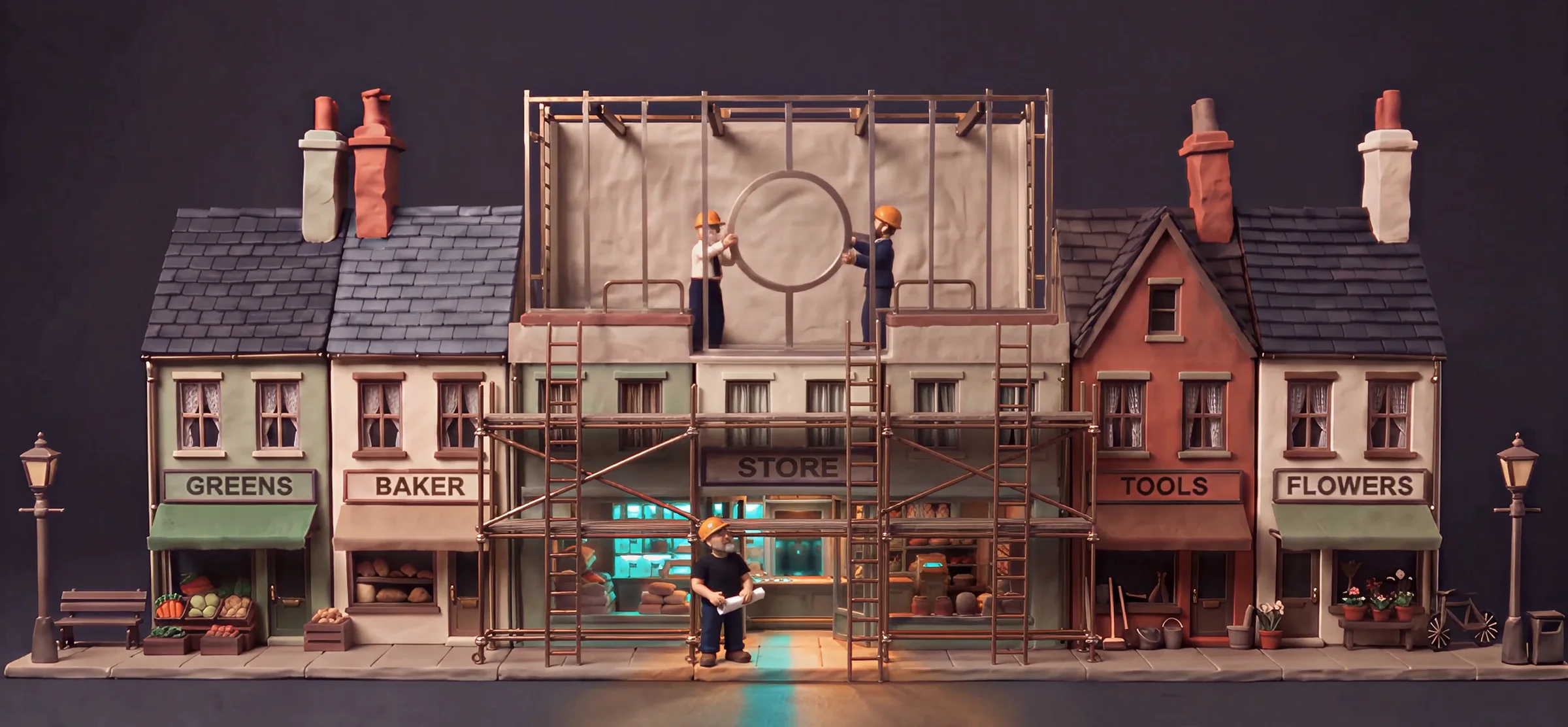
The thing you're best at isn't on any software shelf.
So it gets built instead, and it belongs to you. Here is how that actually goes.
Why It Works This Way
Anything you can buy, your competitors can buy too
So buy it wherever it makes sense. That is often the right answer, and you will be told so plainly when it is. What it will not be is the reason a customer chooses you over the firm down the road.
Which Is Which
Most of what your business does is ordinary. Some of it isn't.
The ordinary
Buy it, keep it standard, leave it alone
Invoicing is invoicing. Customising the ordinary is how businesses pay twice, once to build the change and again every time the software underneath moves on. Nobody chooses you because of how your invoicing works.
The part that's yours
The way you actually win work
That part is not on any shelf, because a vendor's whole business depends on selling the same thing to your competitors. Put it into their product and it stops being yours. They generalise it, then they sell it to everyone.
So the decision is which of your systems is which. Most businesses get it backwards: the money goes into customising the ordinary, and the part that actually wins work gets bought off a shelf.

How The Work Goes
So where do we start?
Not with software. With what you already do, and the people who do it. Most businesses already run on something, and none of it gets thrown out to make room for something new.
What happens to the software you already have
Connect
It does its job, so it stays. The new work connects to it, and nobody retypes anything.
Replace
It is not doing the job, and building a better one is not worth it. Open source takes it over.
Build
This is how you win work, so it gets built into software you own. The old system goes, and the code is yours.
One of those three, per system. That decision is the starting point, and it comes after somebody has looked rather than off a price list.
First
Something gets easier before anything changes

Today
Held together by hand
It already works. Somebody copies one page into another every morning, and rebuilds the same spreadsheet every Monday.

A few weeks in
Already done when you get there
The document is waiting where it used to be copied out. The spreadsheet is already filled in. Same room, no new software, nothing to learn.

As It Goes On
The gaps get filled
Projects create themselves and land with the right person. A channel says when work arrives, and when it is running late. Invoices go out as jobs close. Update one thing and the others follow.
Standard software arrives here rather than at the start, only where building it would be a waste, and which pieces differ for every business.
Where It Ends Up
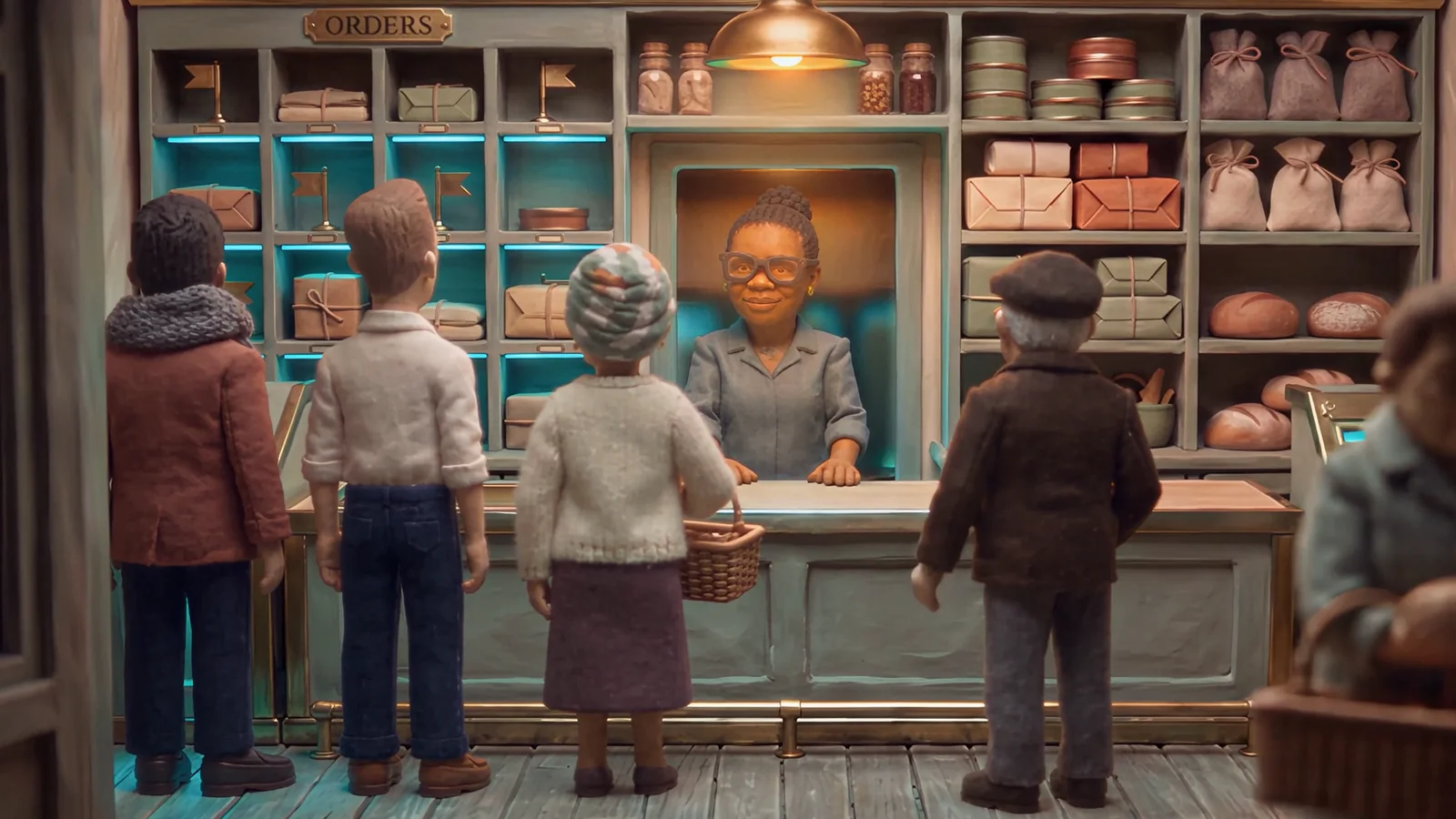
Your customers stop having to ask
They see results rather than jobs. Some log in to a screen of their own, some would rather the updates just arrived, and some will always want to phone.
How each customer deals with you stays their choice, not something they get moved off. Every one of those routes runs on the same automation underneath, so keeping the older one open costs your people nothing.
Nobody is asked to change how they work until the work is already easier.
The fetching, the copying and the chasing is machine work. The conversation with your customer is not.
Most companies do it the other way round
They automate the customer-facing part first, because that is where the cost is easiest to see. You end up with a phone tree, and your people still spend the day chasing information.
This way works better
The machine looks things up, moves the data and handles the routine. Your people take the judgement, the exceptions and the apologies, and they arrive already knowing everything.
The Honest Objection
Custom software goes stale when it is built once and then left alone
That is a fair worry, and it is what happens to most of it. Your business will keep moving, so the layer carrying the part that is yours is built to keep moving with it. Changing it later is part of the design rather than a second project.
You can replace us without pain
Every software relationship you have had was built to make leaving difficult. For a vendor or a large integrator the cost of switching is the business model. So the fair question, whether or not it gets asked out loud, is what happens to you if this firm disappears. The answer is in how the code is written.
Conventional, not clever
Anything a competent developer would not expect is a liability, however elegant it is.
Documented as written
Written down as it is built, rather than reconstructed afterwards by whoever is left.
Tested
So somebody new can change something and find out straight away whether they broke it.
Runs from your repository
Standing it up is a command, not a conversation with the people who built it.
That means another competent firm can pick it up without a handover period. Which is not the same as without an engineer: getting a change safely into a system that carries revenue still involves environments, migrations, access control and somebody on call. The claim is that nobody has to spend three months learning your code first.
You do not have to care about any of this, and plenty of people never do. The exit is there whether or not you ever use it. That is a risk we carry, not one you do.

AI on your terms, not a vendor's
Every business is now being offered AI inside software it already pays for, and it is usually switched on by default. It is often genuinely useful, which is why the question deserves a real answer rather than a shrug or a scare.
The smaller worry
That a model reads your data
Most serious vendors now contract this away, and it is the part of the question that already has an answer.
The bigger one
That they learn how you work
Not your invoices. Your exceptions. Which orders you expedite and why, how you price the awkward job nobody else wants. Given enough customers doing the same, those judgement calls become a feature, and the feature is sold to everyone in your industry. That part cannot be undone.
So everything built for you sends its AI requests through one door, and you decide what sits behind it.
The model runs on your contract
In a region you choose
Nothing retained for training, because your agreement says so
Change model or provider later without touching what was built
Starter Pack
If the way you work is already fine and what you need is the ordinary tools, that is a simpler and much cheaper thing, and it is a fine place to stop.
How It Is Paid For
Fixed scope, or a share of the outcome
Fixed scope
Priced as an outcome rather than off a rate card, so the number is the number.
A share of it
For the right fit, an arrangement where our engineering is at risk against the result instead of billed either way.
Which one fits is a conversation, and it depends on whether the result is something both sides can measure.